
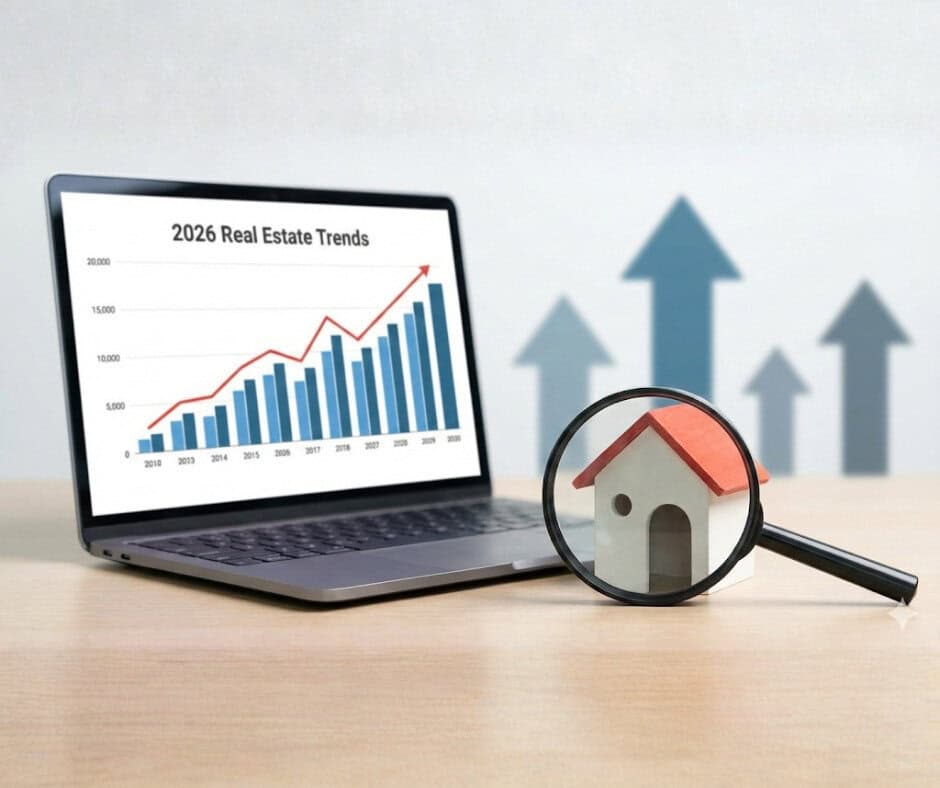
With 2025 now wrapped up and 2026 under way, many Mid-Atlantic homeowners, renters, and prospective buyers are asking: What will the housing market look like this year? Based on the latest national and regional forecasts — and factoring in local patterns — 2026 likely brings a mix of modest improvements and continuing challenges.
📈 Mortgage Rates & Home-Price Growth: What Analysts Predict Mortgage rates likely to moderate, but remain elevated
- According to Zillow’s 2026 forecast, the 30-year fixed mortgage rate is expected to remain “above 6%” — not collapsing to the pandemic-era lows, but providing some relief compared to recent years.
- National Association of Realtors (NAR) economists expect a “modest decline” in rates, estimating the average around6.0% in 2026.
- Still, experts warn that dramatic drops are unlikely: persistent inflation, economic uncertainty, and broader monetary-policy forces will likely keep rates in the mid-6% range.
What this means for prospective buyers: The mortgage-buying environment may get a bit easier — but don’t expect a return to ultra-low rates. Affordability will improve modestly, not dramatically.
Home price growth will likely slow — modest appreciation ahead
- Zillow projects U.S. home values to rise about 1.2% in 2026 nationwide.
- Another major forecast, from Redfin, anticipates a ~1% increase in median home sale prices next year.
- Regional commentary notes that price growth is slowing compared with the height of the post-pandemic boom — a trend that should continue into 2026.
Because of slower price growth + somewhat lower (or stable) mortgage rates, many buyers may find 2026 a year whenhouse-hunting becomes a little more accessible — especially compared to 2022–24.
🏠 What Affordability Could Look Like in the Mid-Atlantic For residents of Maryland, Virginia, Pennsylvania, Delaware, and D.C.-area suburbs:
- With mortgage rates likely near 6% and home-price appreciation slowing, monthly housing payments may grow more slowly than wages — improving affordability for buyers who have delayed purchase decisions. This is one of the key drivers behind what some are calling a “gradual market recovery.”
- On the seller side: stable or modestly rising values may lead many homeowners — especially those who secured low pandemic-era rates — to stay put. This “lock-in effect” could continue to constrain resale inventory in some areas, prolonging tight-supply conditions.
- For first-time buyers, growing inventory (especially new-builds) and slightly easier financing could make 2026 one of the better recent years to enter the market — compared with the high-rate, high-demand peak years of 2021–2023.
🔄 Rental Market Outlook: What Renters Should Watch in 2026 The rental market — always a major part of Mid-Atlantic housing — could see some important changes in 2026:
Rents may stabilize or dip modestly
- Zillow forecasts that multifamily rents nationwide will rise only about0.3% in 2026, suggesting a near-flat trend for many apartments.
- Some analysts expect a modest drop in rent growth or even slight declines, particularly in markets where new construction comes online and demand softens a bit.
- The result: renters may find more negotiating power than in years past — especially for units that have been on the market for a while or in neighborhoods seeing increased supply.
Why rental affordability might improve (or at least stop worsening)
- As home-buying becomes marginally more affordable, a fraction of renters might shift toward purchasing — reducing long-term demand for rentals.
- Meanwhile, new apartments and possibly more “build-to-rent” developments — especially in suburban or commuter-friendly locations — could expand rental supply, which helps moderate rent increases.
- For renters who stay put: this means more options, potential concessions or promotions (deal offers from landlords), and a more competitive rental market — especially outside core urban centers.
🔎 What Could Vary Across the Mid-Atlantic — Local Differences Matter While national and broad-regional forecasts offer a helpful backdrop, the Mid-Atlantic is far from uniform. Results in 2026 will vary significantly depending on local conditions:
- Metro vs. suburban or ex-urban areas: Urban cores may see rental stabilization or even modest price dips, while commuter-suburbs — especially those still in high demand — might hold value or see slightly different dynamics.
- New-build vs older housing stock: Areas with active new-construction (especially affordable or mid-priced homes) may benefit from increased supply and more buyer interest. In contrast, regions with limited building capacity or heavy competition may remain tight.
- Economic and employment trends: Areas with strong job growth, growing industries, or improved commuter links may outperform more stagnant markets.
- Local renter vs home-buyer population mix: Communities with many renters (e.g. near universities, transit corridors, employment hubs) may see slower shifts toward ownership. Others, especially with families and long-term residents, may see more buying activity.
🧭 What This Means for Different Groups in 2026 For Buyers
- 2026 may be one of the better windows to enter the market — with slower price growth, slightly better mortgage conditions, and increasing new-build supply.
- Be strategic: pre-approval helps, but buyer competition may persist in hot sub-markets. Local market knowledge will matter more than ever.
For Sellers
- Price stability — rather than rapid appreciation — may be the new normal. Overpricing could backfire; pricing and presentation will remain keys.
- Some homeowners may stay put thanks to favorable existing financing, which could keep resale supply constrained in certain markets.
For Renters
- More balance in supply and demand could yield modest rent stabilization or negotiation leverage.
- Watch new rental developments — especially near transit or growing suburban areas. More options may mean better deals.
For Investors / Developers
- Entry-level and mid-priced new-builds may appeal to first-time buyers — creating demand for modestly sized homes or townhomes, especially near commuter hubs.
- Rental properties in growth corridors or near employment centers may remain attractive, particularly if rental demand holds steady or increases while home-ownership remains out of reach for some.
✅ Bottom Line: 2026 Looks Like Gradual Progress — Not a Reset 2026 won’t bring a housing boom or drastic crash. Instead, experts forecast a gradual shift toward stability: slower price growth, mortgage rates modestly improved, and rental markets perhaps easier to navigate.
