
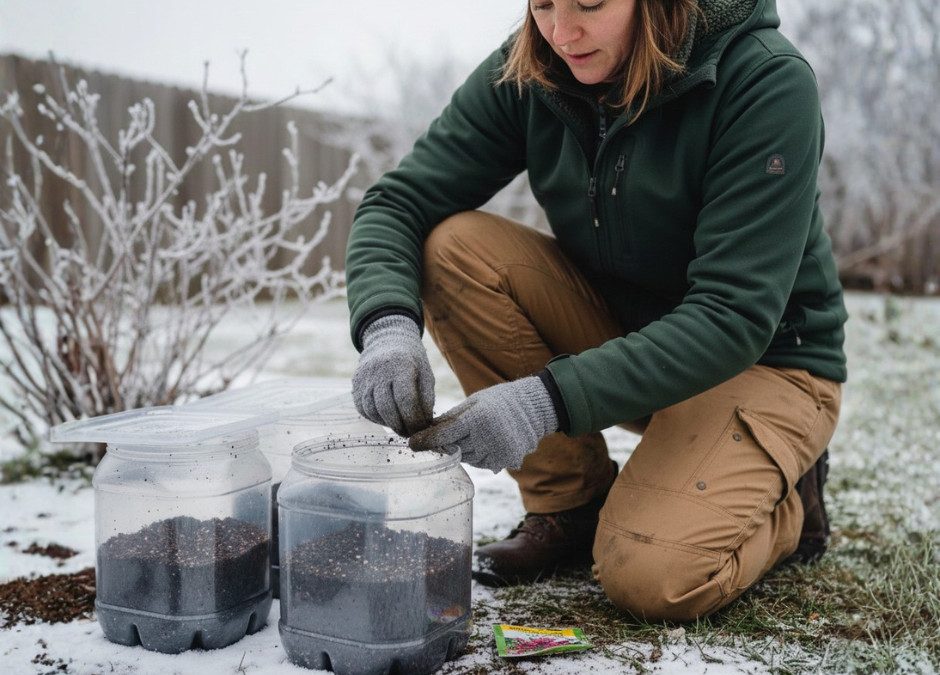
If you’re the kind of person who starts missing your garden the minute you pull the last tomato
off the vine… welcome. You’re among friends. 😅
The good news is you don’t have to wait until spring to get growing again.
In Maryland (Zone 7), winter sowing is one of the easiest, cheapest ways to start seeds
outdoors during winter so they’re ready to pop up strong and hardy once the weather starts
warming up.
No grow lights. No seed-starting trays all over your kitchen counter. No panicking because your
seedlings look like spaghetti. Just nature doing what nature does best—with a little help from
you.
Let’s dig in. 🌱
What Is Winter Sowing?
Winter sowing is a method of planting seeds outdoors in mini “greenhouses” (usually recycled
plastic containers) during the winter. The seeds stay dormant until the temperature and daylight
are right, then they germinate naturally.
It’s basically the gardening version of:
“I’ll set this up now… and future me will be thrilled.”
Winter-sown seedlings tend to be:
✅ more cold-hardy
✅ less leggy than indoor seedlings
✅ better adapted to outdoor conditions
✅ ready to transplant earlier in spring
Why Winter Sowing Works So Well in Maryland (Zone 7)
Maryland winters usually give us:
● cold snaps
● warm spells
● rain, wind, and occasional snow
● and that random 60-degree day in February that makes you question reality
That back-and-forth is exactly what winter sowing is made for.
Seeds that naturally germinate in early spring (or need cold exposure to break dormancy) thrive
with this method.
What ou Can Winter Sow (Best Seeds for Zone 7)
Not all seeds are good candidates for winter sowing, but many are.
🌼 Flowers that LOVE winter sowing
● Coneflower (Echinacea)
● Black-eyed Susans (Maryland’s favorite!)
● Snapdragons
● Calendula
● Poppies
● Bachelor buttons
● Sweet alyssum
● Milkweed (great for monarchs)
🥬 Vegetables and herbs you can winter sow
● Lettuce
● Spinach
● Kale
● Arugula
● Swiss chard
● Broccoli, cabbage, cauliflower
● Parsley
● Cilantro (it actually prefers cool weather)
● Dill
🌿 Perennials and natives
A lot of perennials and native plants benefit from the cold cycle because it mimics what would
happen naturally in the wild.
When to Winter Sow in Maryland (Zone 7)
The best time depends on what you’re planting:
Late December–February
Perfect for:
● perennials
● natives
● cold-hardy annual flowers
February–March
Perfect for:
● cool-weather vegetables
● herbs
● early spring flowers
In Maryland Zone 7, most gardeners winter sow January and February for the best balance.
How to Winter Sow Seeds in 6 Easy Steps
You’ll feel like a garden wizard after this. 🪄🌱
Step 1: Gather supplies
You’ll need:
● a clean CLEAR plastic jug or container (milk jug, salad container, rotisserie chicken
container)
● potting mix (NOT garden soil)
● scissors or a sharp knife
● duct tape/packing tape
● a garden marker
● seeds
● something to poke drainage holes (screwdriver, scissors, nail)
Step 2: Cut your container
For milk jugs:
● cut around the jug about 3–4 inches from the bottom
● leave a small hinge area uncut so it opens like a clamshell
For salad containers:
● use as-is, just add drainage holes and ventilation holes.
Step 3: Add drainage holes
This part matters:
● poke holes in the bottom so excess water can drain
● add 2–4 holes near the top for ventilation (or keep the cap off milk jugs)
Step 4: Add potting mix and moisten it
Add 3–4 inches of potting mix.
Moisten it so it feels like a wrung-out sponge.
Step 5: Plant your seeds
Follow the seed packet depth instructions.
Most winter-sowed seeds don’t need to be buried deep—just pressed in or lightly covered.
Step 6: Close it up, label it, and place it outside
Tape the container shut with duct tape.
Label it clearly (trust me… you’ll forget what you planted and end up with Surprise Jungle).
Place outside in a spot where it will:
● get rain/snow
● get sun
● not get kicked over by the dog, kids, or wind (optional but recommended)
Winter Sowing Tips So You Don’t Lose Your Mind
✅ Label EVERYTHING
Use a Sharpie on the outside + a label inside if possible.
✅ Don’t put them under a porch roof
They need moisture from natural rain/snow. If it’s covered, you’ll have to water.
✅ Don’t overwater
If it’s raining regularly, you likely won’t need to do anything.
✅ Check them once a week
Not obsessively. Just enough to make sure the soil stays lightly moist.
✅ Expect germination later than indoor sowing
They’ll sprout when the weather says it’s time, not when you say it’s time.
What Happens in Spring?
When things warm up:
● you’ll start seeing sprouts (some early, some later)
● you’ll be tempted to open them up immediately (don’t rush!)
When seedlings appear:
● start opening the container during warm days for airflow
● close back up at night if temps are still dropping hard
When it’s consistently warmer:
● remove the top entirely
● harden them off naturally (they already are pretty tough)
● transplant when they have a few true leaves
Final Thoughts: Winter Sowing Is the Lazy Genius Way to Garden
Winter sowing is perfect for Maryland gardeners because it:
● fits our winter weather patterns
● costs almost nothing
● produces sturdy seedlings
● and makes spring planting way easier
So if you’re itching to get your hands in some soil this winter, this is your sign.
Because spring will be here before you know it—and you’ll be so glad you started now.
📩Looking for more space to garden this year? Let’s chat about your home buying options!