
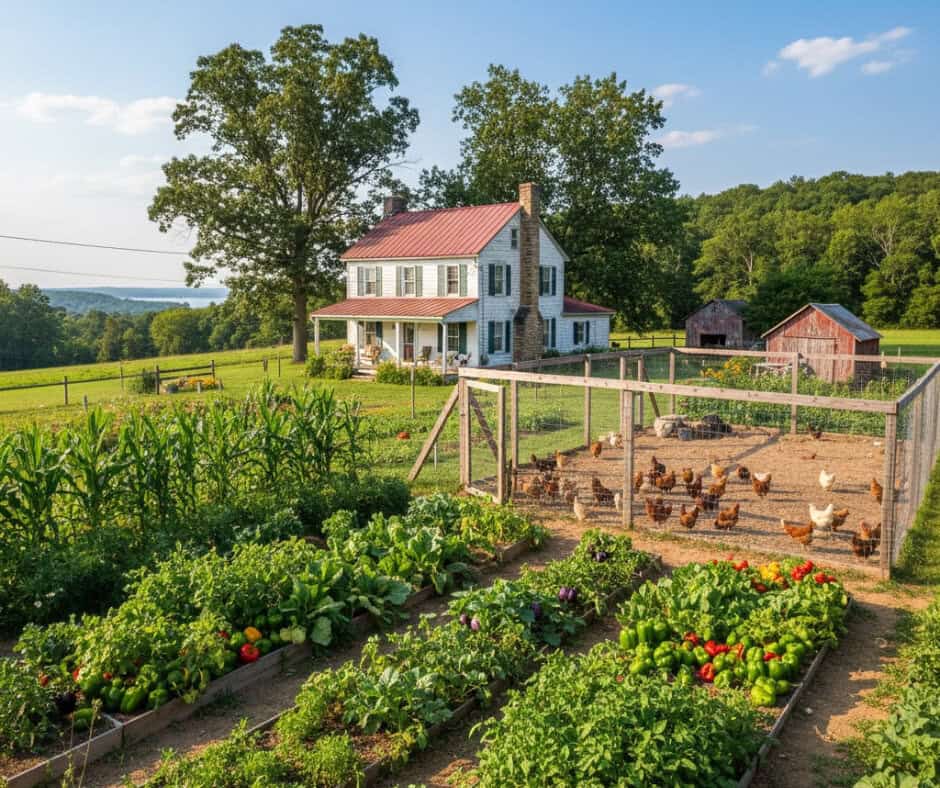
Groceries are expensive. Eggs feel like luxury items. Tomatoes might as well be gold. So it’s no surprise more Marylanders are asking: “Can I grow my own food?” “Can I raise chickens?” “Can I homestead… even a little?” Whether you want a full backyard garden or a mini hobby farm, finding the right property is key — because not every home is homestead-friendly. Let’s break down exactly what to look for when buying a home for homesteading in Maryland… and what you can do if your current home isn’t zoned for animals.
🌱 What Is “Homesteading,
” Anyway?
Modern homesteading doesn’t mean living off-grid in the woods (unless you want to). It can be as simple as:
- Growing vegetables and herbs
- Keeping backyard chickens for eggs
- Planting fruit trees
- Composting
- Raising small animals like goats or bees
Even a small suburban homestead can save money and help you feel more in control of your food budget.
✅ What to Look for in a Maryland Homesteading Property 1. Know the Zoning Rules (Because Maryland Is County-by-County) Here’s the #1 surprise for most buyers: Maryland does not have one statewide backyard livestock rule. Each county and city sets its own zoning restrictions. That means chickens might be allowed in one neighborhood… and totally banned 10 minutes away. Maryland even provides a resource listing county zoning approaches related to agriculture.
👉 Before buying, check:
- County zoning classification
- City ordinances
- HOA restrictions (sometimes stricter than the county!)
2. Lot Size Matters More Than People Think Want chickens? Goats? A big garden? You’ll need space — and many counties require minimum acreage for larger animals. For example, Calvert County specifically advises hobby farmers to review their zoning ordinance before purchasing livestock.
Tip: If homesteading is the goal, look for:
- Larger lots
- Rural residential zoning
- Properties outside town limits
- No HOA (HOAs and chickens are not friends)
3. Sunlight Exposure: The Secret Ingredient Vegetables need sunlight like Marylanders need Old Bay. For most gardens, you want: ✅ 6–8+ hours of direct sun daily When touring homes, notice:
- Where the sun hits in the afternoon
- Whether trees or buildings shade the yard
- Southern exposure yard space
4. Soil Quality: Don’t Assume It’s Good Maryland soil varies wildly — clay-heavy in some areas, sandy in others. The University of Maryland Extension recommends soil testing to understand nutrients, pH, and how your soil functions.
Maryland also provides a soil testing guide emphasizing that testing saves money and helps determine what plants will grow best.
Before planting an entire garden: Get a soil test. It’s cheap, easy, and prevents disappointment.
5. Water Access and Drainage A homestead needs water — and not just from a hose stretched across the yard like a spaghetti noodle. Look for:
- Outdoor spigots
- Room for rain barrels
- Good drainage (standing water = problems)
A yard that turns into a swamp every spring is not ideal for gardens or animals.
6. Backyard Chickens: Maryland Rules You MUST Know Yes, chickens are allowed in many areas… But Maryland requires poultry registration for anyone keeping birds. The Maryland Department of Agriculture states that poultry owners must register their birds for disease prevention purposes.
Also note: some exemptions apply for very small, temporary flocks (per MDA guidance).
🐓 Always check local rules for:
- Number of hens allowed
- Rooster restrictions
- Coop setbacks
- Permits
🏡 What If Your Current Home Isn’t Zoned for Homesteading? Don’t worry — you’re not doomed to grocery store cucumbers forever. Here are some creative homesteading alternatives:
🌿 1. Focus on Gardening (Usually Allowed Everywhere) Even if animals are restricted, gardening is rarely prohibited. Try:
- Raised beds
- Container gardens
- Vertical gardening on patios
- Herb gardens indoors
🌻 2. Join a Community Garden Many Maryland towns offer plots where you can grow food without needing land. Bonus: You meet fellow plant nerds.
🐝 3. Look Into Local Farm Shares (CSA Programs) Not zoning-friendly? You can still get local produce through CSA subscriptions. It’s like outsourcing your homestead. 😉 🪴 4. Grow Indoors Year-Round
Yes, you can grow food inside:
- Lettuce
- Microgreens
- Herbs
- Tomatoes with grow lights
No zoning board can stop your basil empire.
🥚 5. Buy Eggs from Local Backyard Farmers Support someone else’s chickens while you stay ordinance-compliant. (And make friends who may trade eggs for zucchini.)
🌾 Final Thoughts: Homesteading Starts With the Right Home Homesteading doesn’t have to be extreme. The right Maryland home can give you:
- Space to grow food
- The freedom to raise animals (where allowed)
- Lower grocery bills
- A healthier, more sustainable lifestyle
And the best part? You don’t need 20 acres.
You just need the right property — and a Realtor who knows what questions to ask.
📞 Ready to Find a Homestead-Friendly Home in Maryland? At Mr. Lister Realty, we help buyers find properties that match their lifestyle — whether that means a bigger yard, garden potential, or room for a few chickens. ✨ Want land without paying full traditional agent commissions? Let’s talk!